Access Required
This case study is protected due to confidentiality agreements and is intended only for professional viewing.
To request access, please email toddcmccauley@gmail.com – I usually respond within 60min unless I’m asleep.
Lowe's Enterprise | Backroom | Released
Daily Price Change
The Landscape
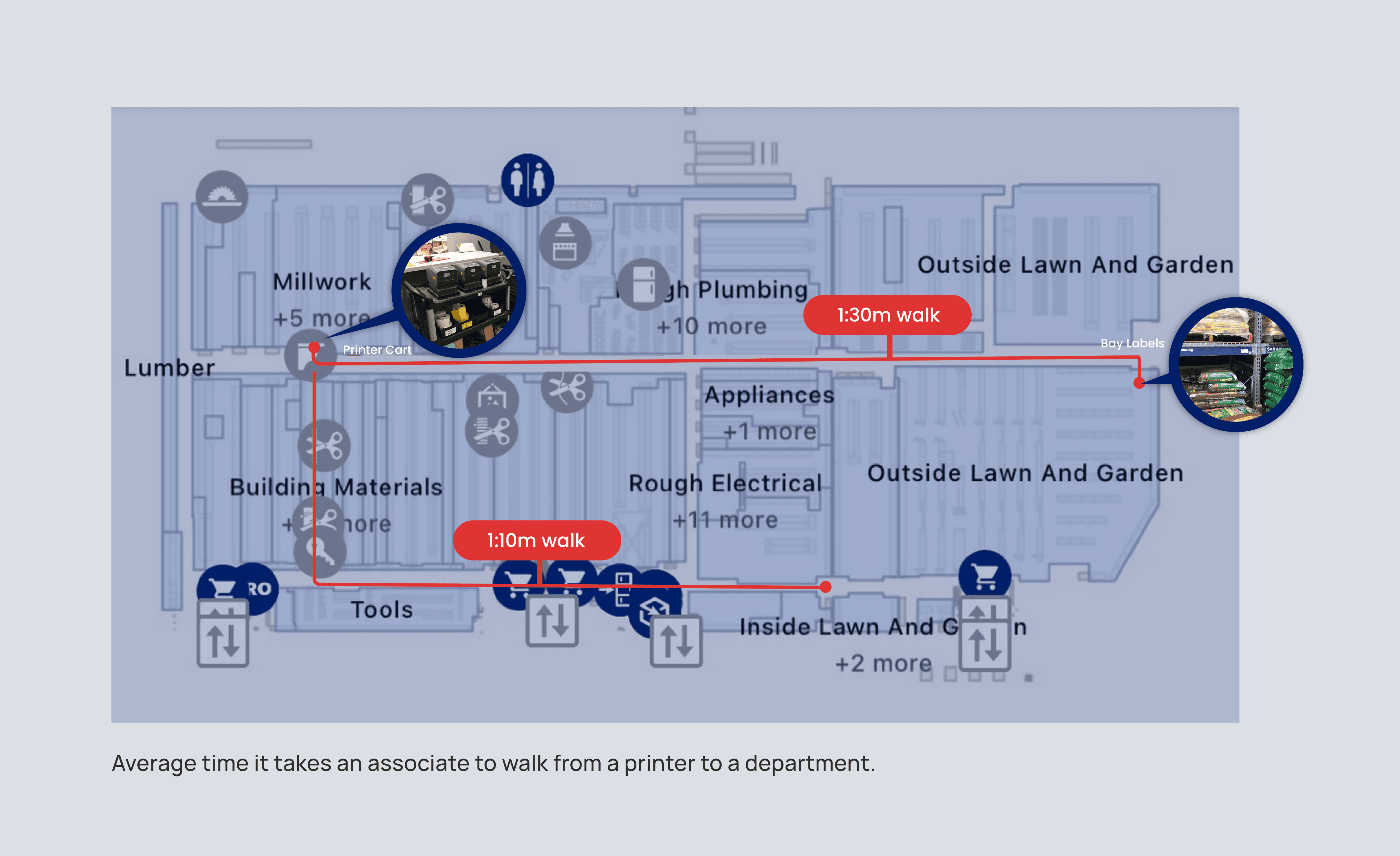
The Daily Price Change (DPC) process was physically demanding, inefficient, and error-prone. Associates printed entire departments of labels, walked to and from printers, manually searched for item locations, and activated labels one by one.
The result? Associates reported logging 15,000 to 40,000 steps per shift just to complete price changes using time and energy spent walking instead of working. Missed or delayed activations also carried real financial risk, directly impacting margin.
The Solution?
Rather than forcing associates to hunt for locations, we designed a guided, task-based workflow that directs them exactly where to go - removing guesswork, reducing wasted effort, and dramatically improving label accuracy.
Discovery
We began by mapping the end-to-end DPC process as it existed, using journey mapping to identify where the experience supported associates, and where it broke down.
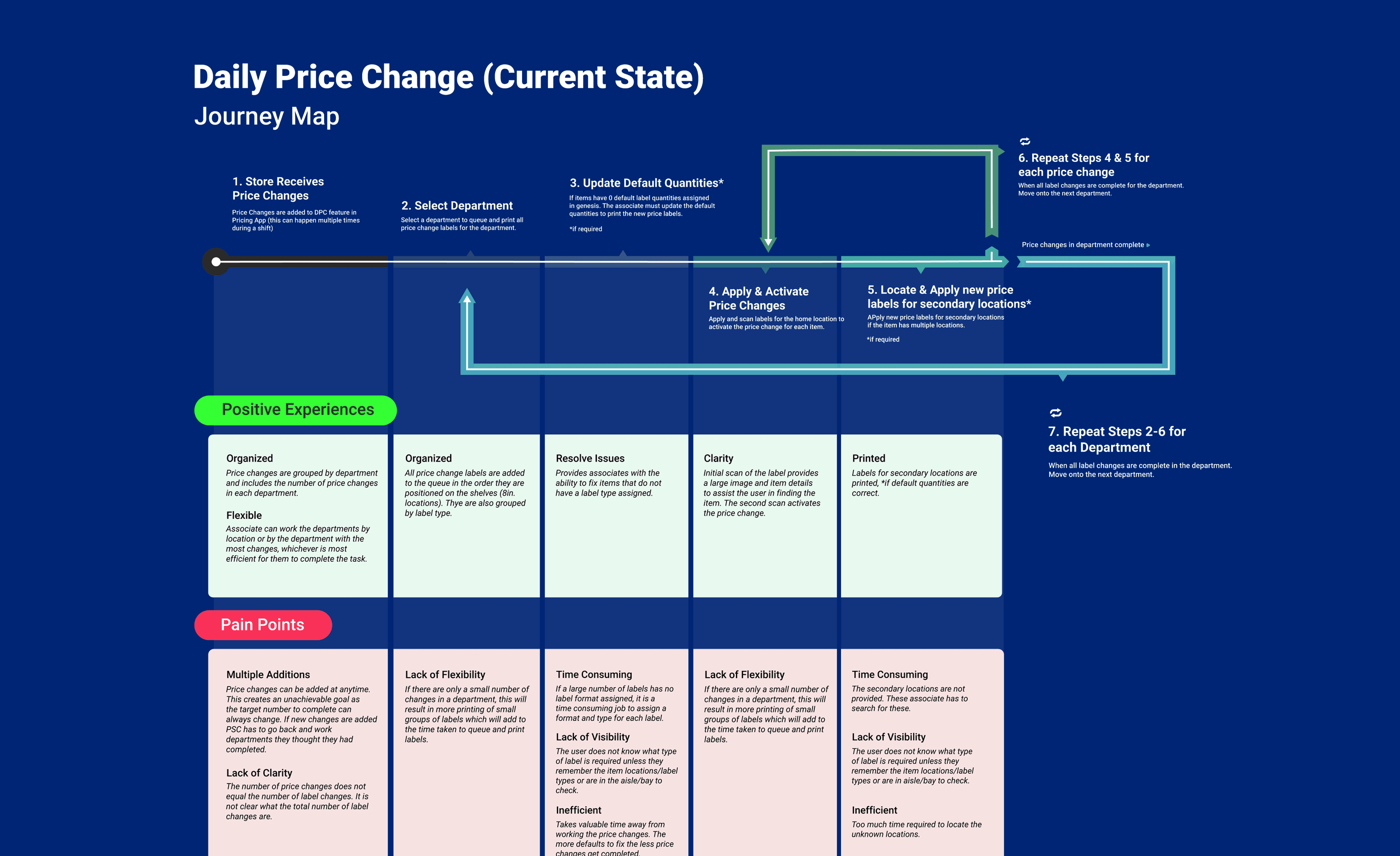
One thing was clear:
One thing was clear: price changes are unavoidable. Market shifts drive updates daily, and those changes flow directly into the pricing app. If labels aren’t applied and activated correctly, the business takes a hit.
Our goal wasn’t to reinvent the entire process it was to preserve what worked while eliminating the friction that slowed everything else down.
Design Process
With clear goals aligned, we designed a new mobile-first DPC workflow and took concepts directly into stores for validation.
We focused testing around 5 key changes:
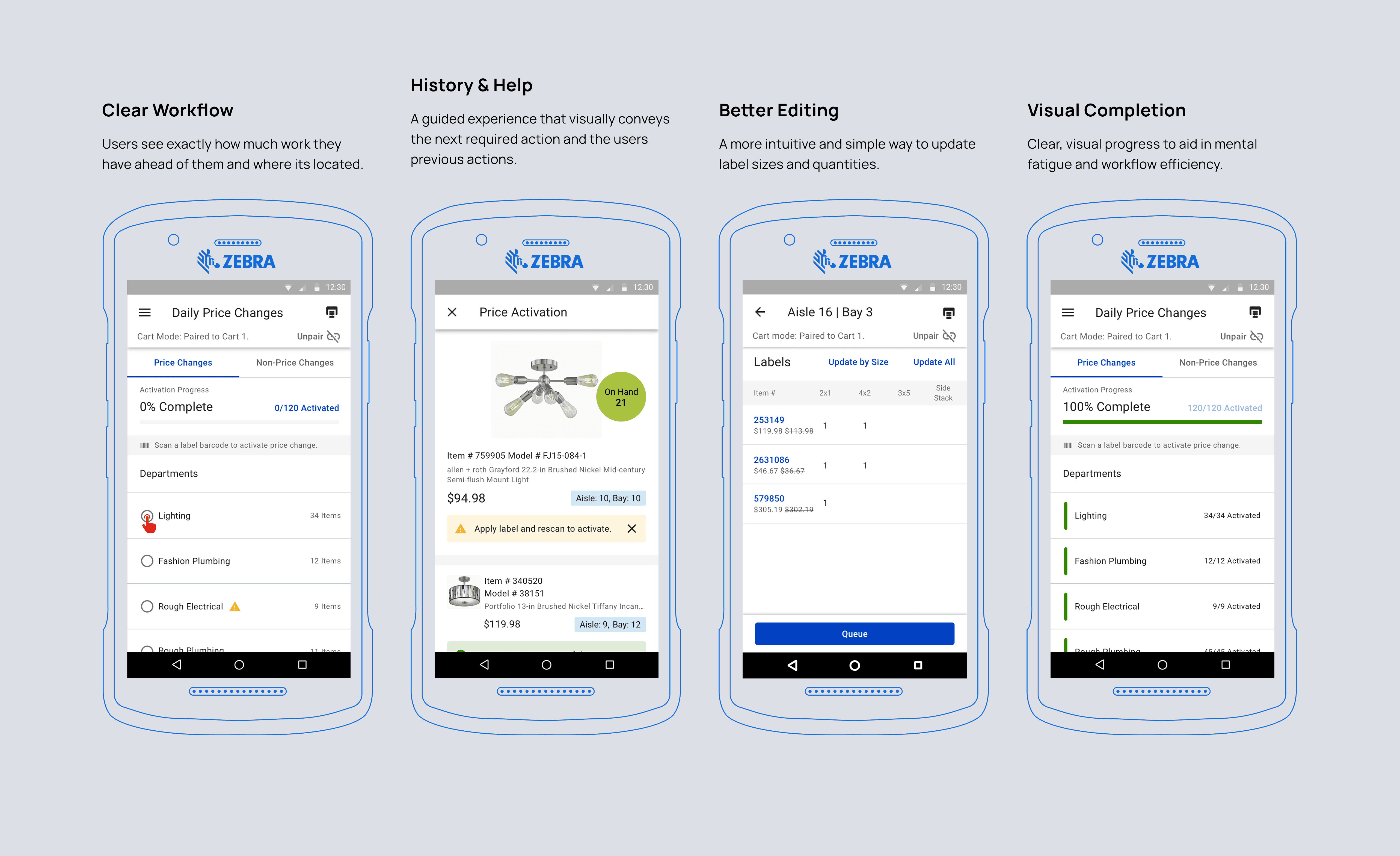
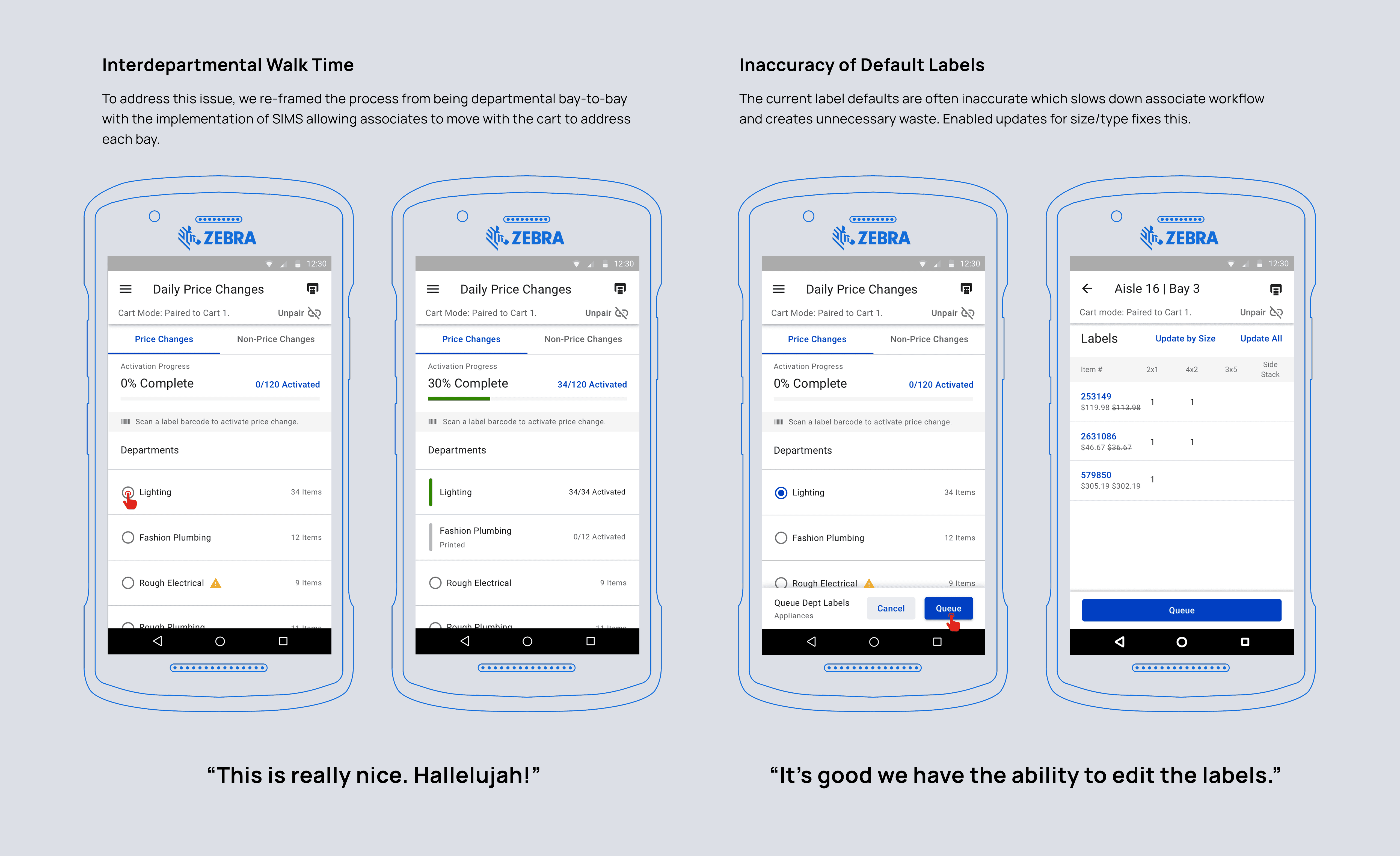
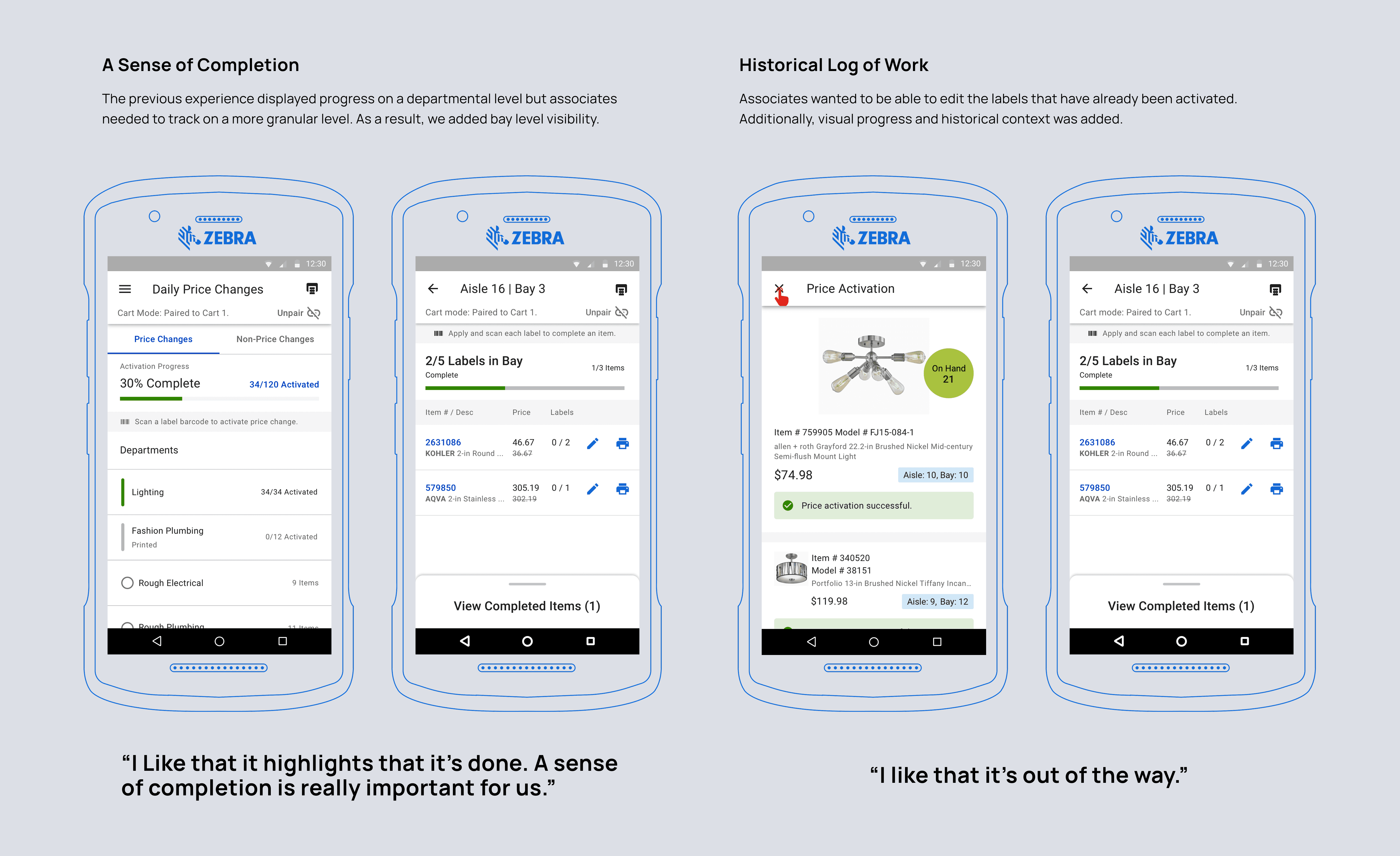
Moving from department-wide activation to bay-by-bay workflows
Requiring a bay scan before starting to anchor associates in the right location
Single-scan activation to reduce repetitive actions
Clear activation history for accountability and confidence
Editable label sizing
The response from associates was overwhelmingly positive. Across implementations, the experience earned a 6.2 / 7 composite ease-of-use score, with feedback highlighting reduced fatigue, clearer direction, and faster completion.
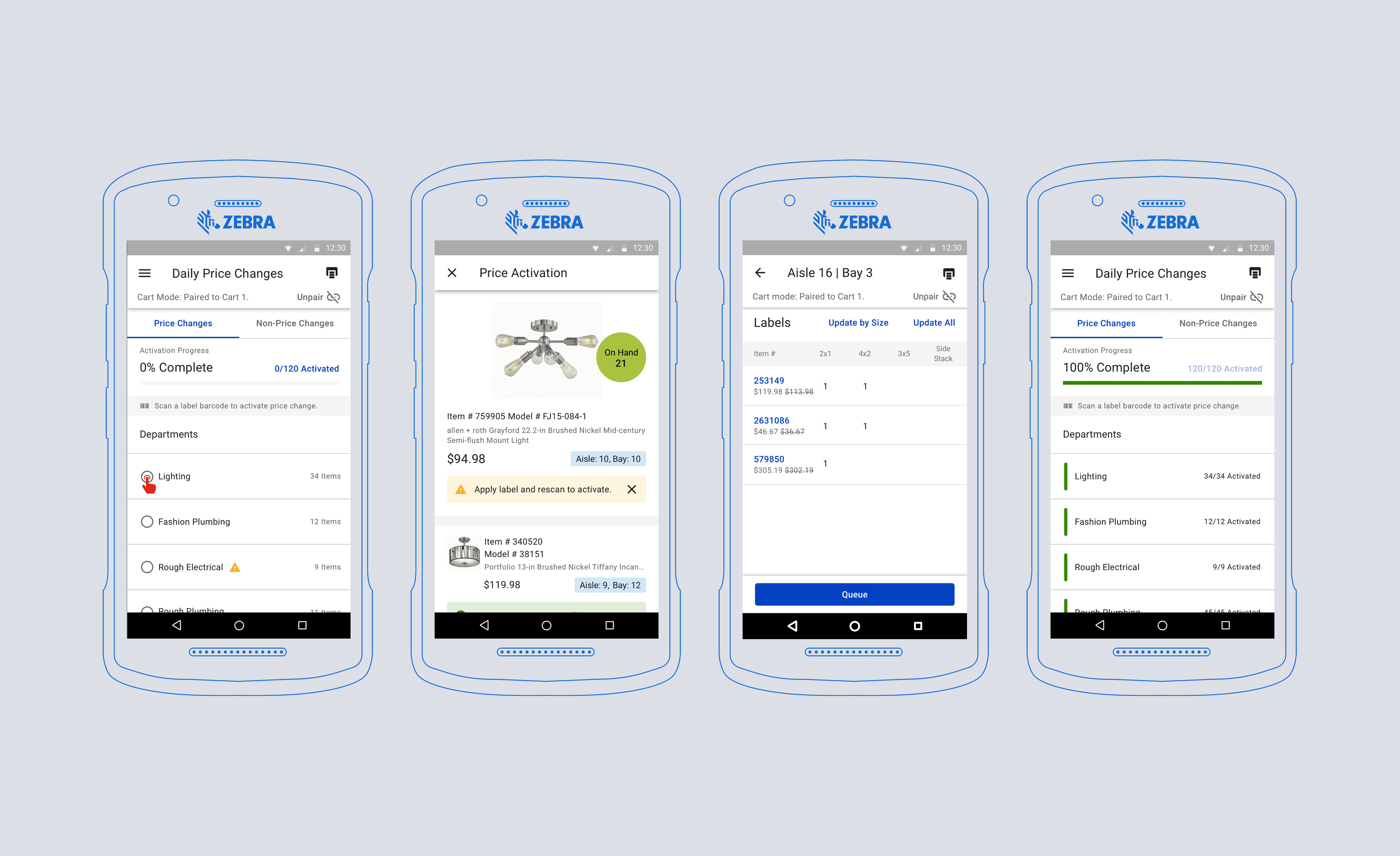
Below are a series of changes made after our research:
Final Designs
The final experience delivers a guided workflow that leads associates directly to the right locations, in the right order, with everything they need in hand.
To support the digital changes, we also partnered on key process improvements:
Requiring mobile cart usage to eliminate long walks back and forth
Throttling daily price changes to 250 to increase completion rates and reduce backlog