Access Required
This case study is protected due to confidentiality agreements and is intended only for professional viewing.
To request access, please email toddcmccauley@gmail.com – I usually respond within 60min unless I’m asleep.
Lowe's Enterprise | Backroom | Released
Claims & Adjustments
The Landscape
At Lowe’s, submitting claims and adjustments between stores and distribution centers (DCs) was a slow, manual, and frustrating process.
Associates operated with limited visibility, unclear status updates, and little understanding of how decisions were made, often resulting in rework, errors, and unnecessary back-and-forth.
The Solution?
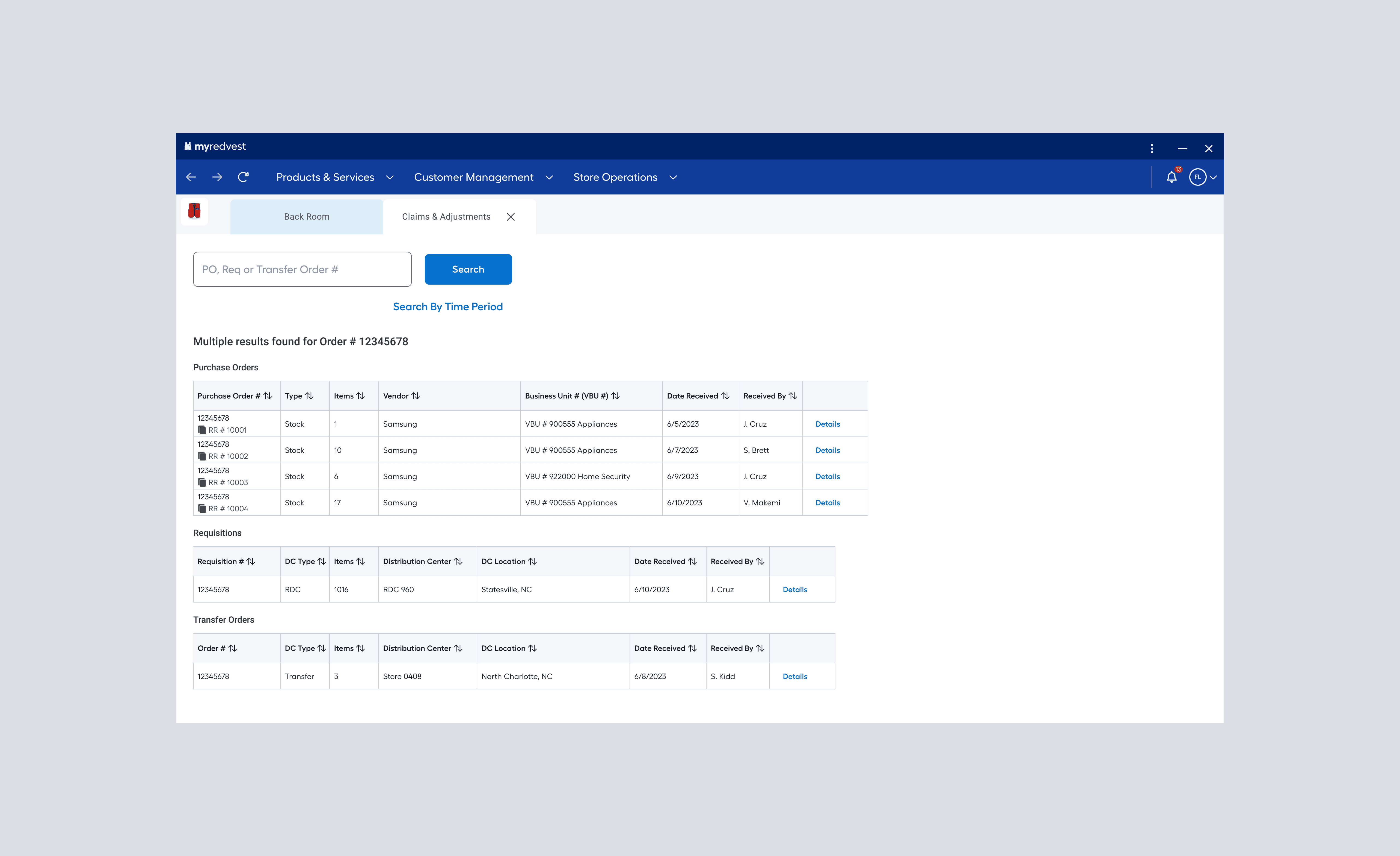
We designed a modern, centralized dashboard that replaced fragmented workflows with a clear, systematized experience that gives associates confidence in what they’re submitting and visibility into what happens next.
What we delivered:
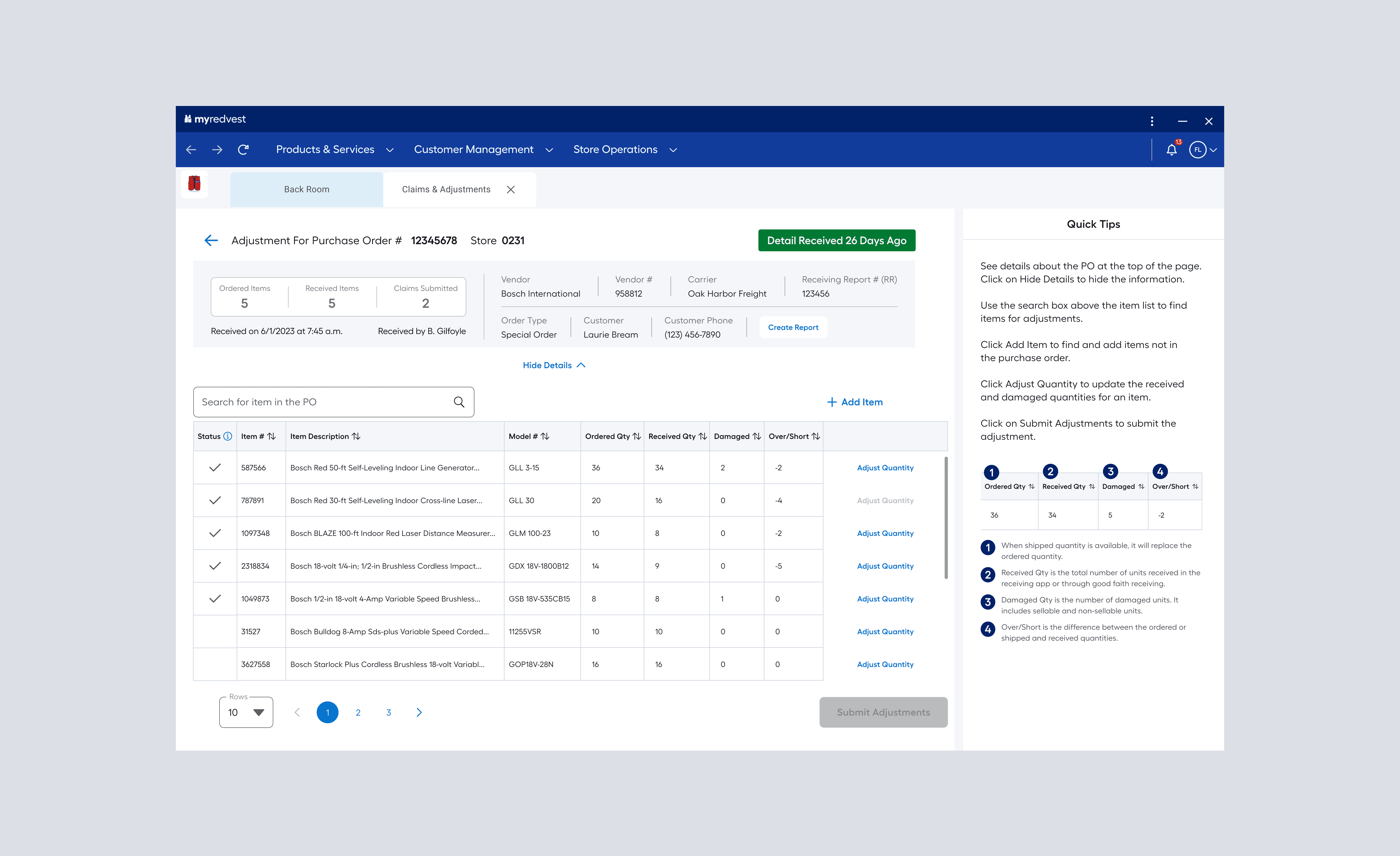
Clear, plain-language order statuses
Real-time feedback and guardrails to prevent costly mistakes
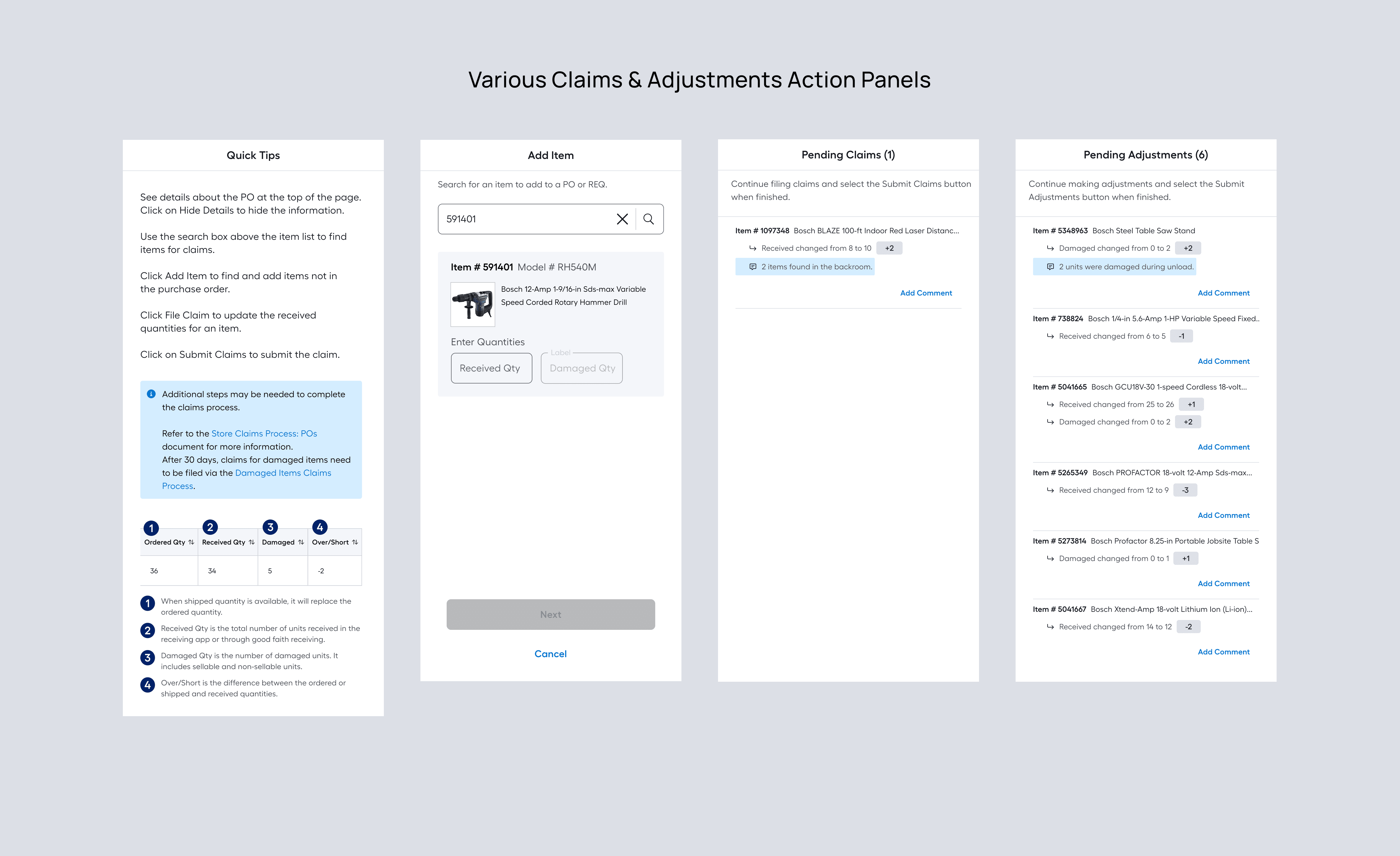
Contextual tips that shorten onboarding and reduce guesswork
A clean, desktop-first experience built for speed and accuracy
Discovery
This was a target-rich problem space. Lowe’s was founded in 1921 and, like many legendary businesses, many internal processes hadn’t evolved much since.
As we dove into the process, a few pain points surfaced quickly:
1) Paper…everywhere
Associates juggled multiple printed documents just to determine what needed adjusting. It's excruciatingly slow, error-prone, and mentally taxing.
2) Genesis
A powerful but unforgiving legacy system. Text-based, difficult to learn, and one wrong keystroke away from a bad day.
3) Email as infrastructure
Filing a claim meant manually emailing a DC contact and managing an informal back-and-forth with no standardization or visibility.
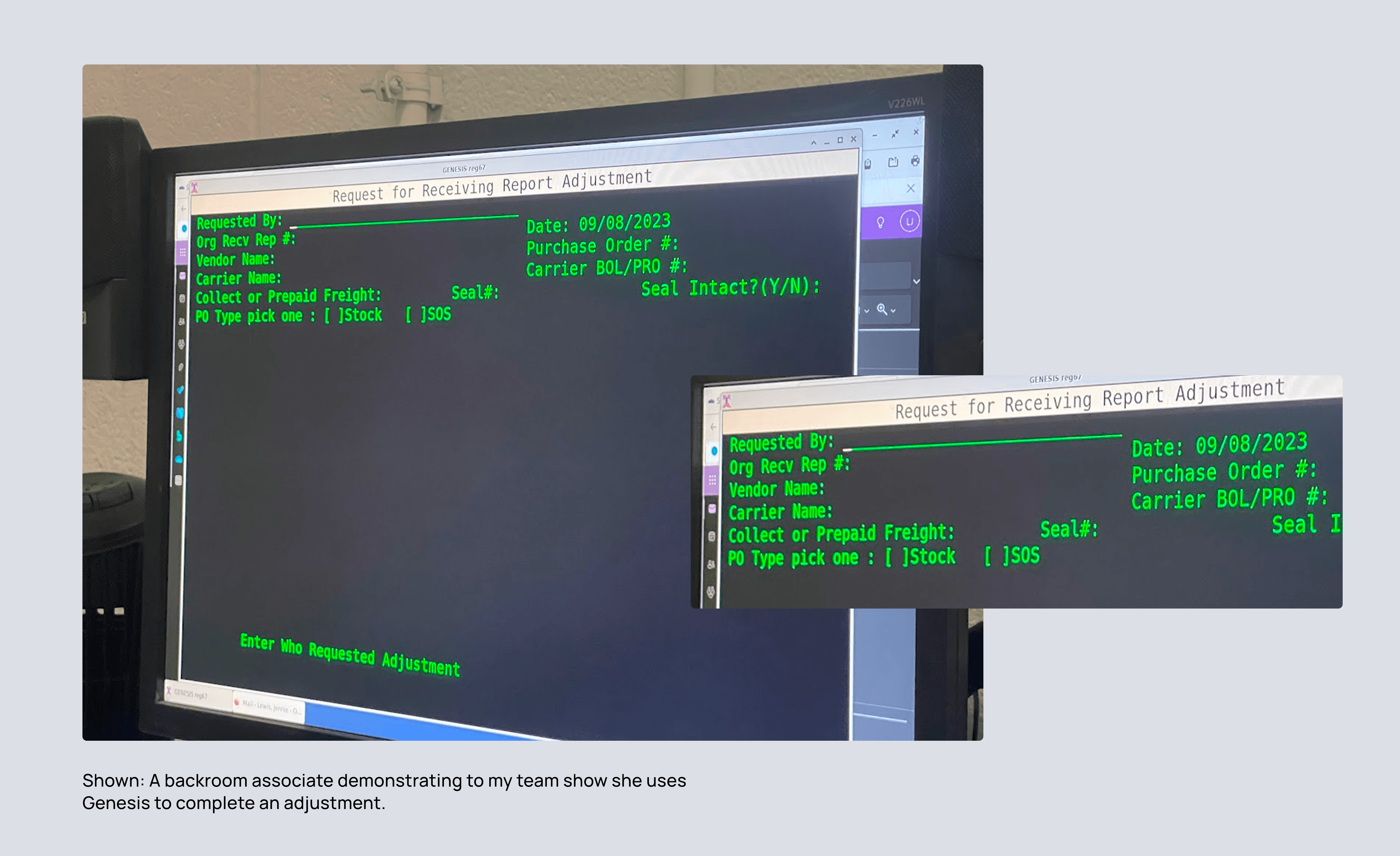
From this, we aligned on three core principles: make information obvious, create a reliable digital paper trail, and simplify how adjustments are made.
Design Process
We focused on building an experience that was simple, direct, and action-oriented for backroom associates.
With a tight timeline, we prioritized the biggest wins first.
The initial release centered on editing and submitting discrepancies with confidence. Smaller refinements were intentionally saved as fast follows.
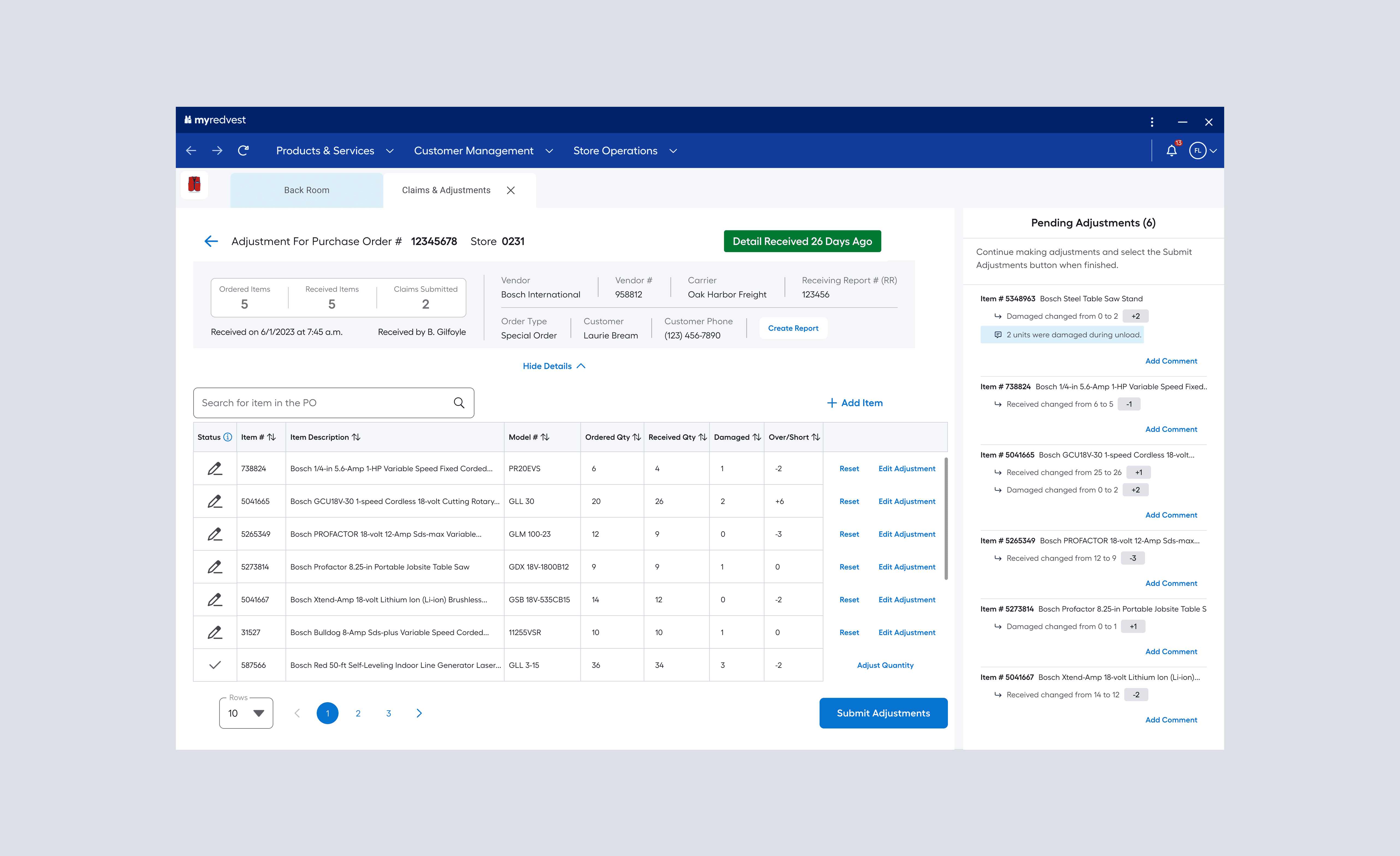
One of the biggest shifts was eliminating email altogether. We designed the system to automatically generate standardized claim reports and send them directly to distribution centers, removing ambiguity and creating a clear record for both sides.
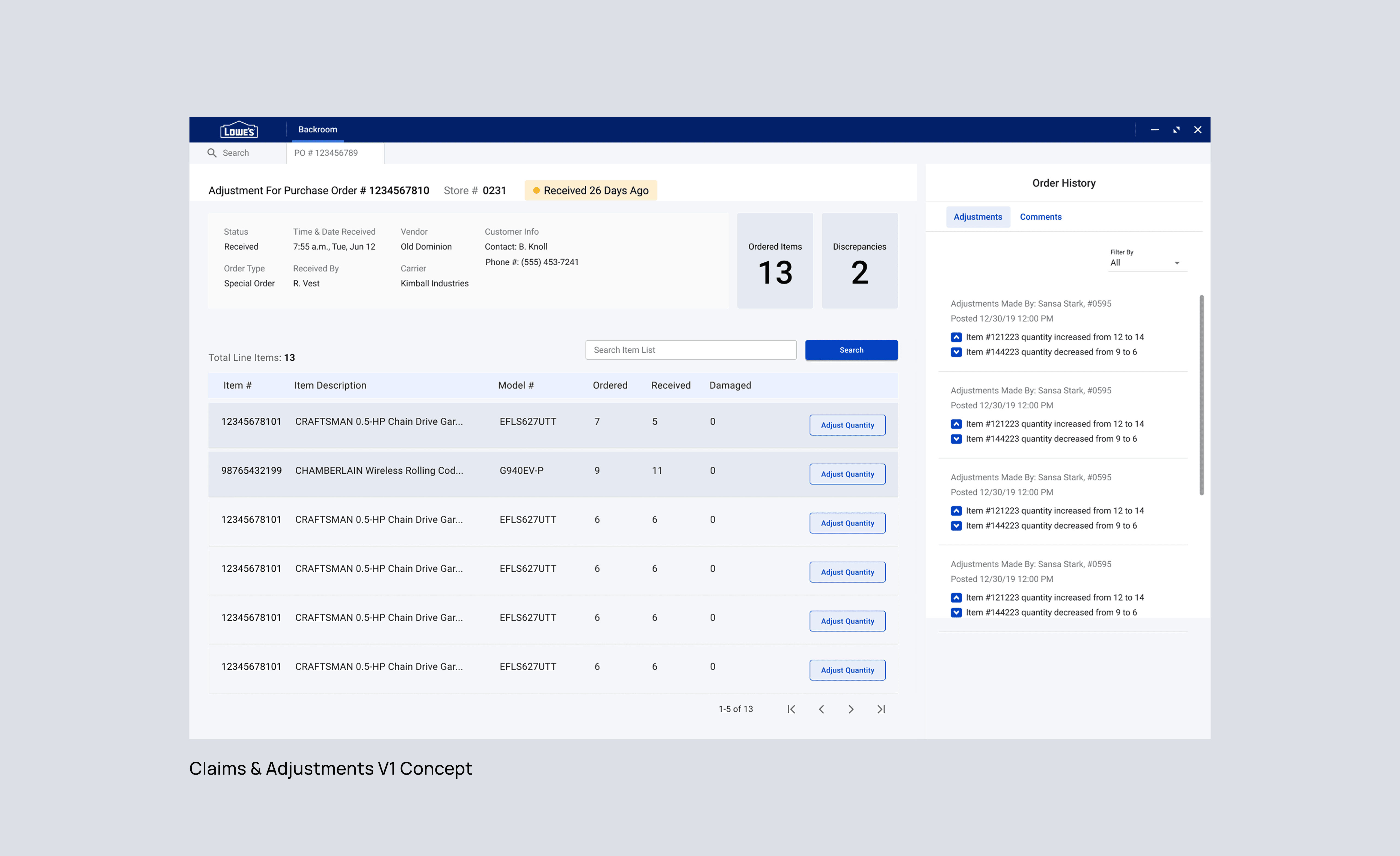
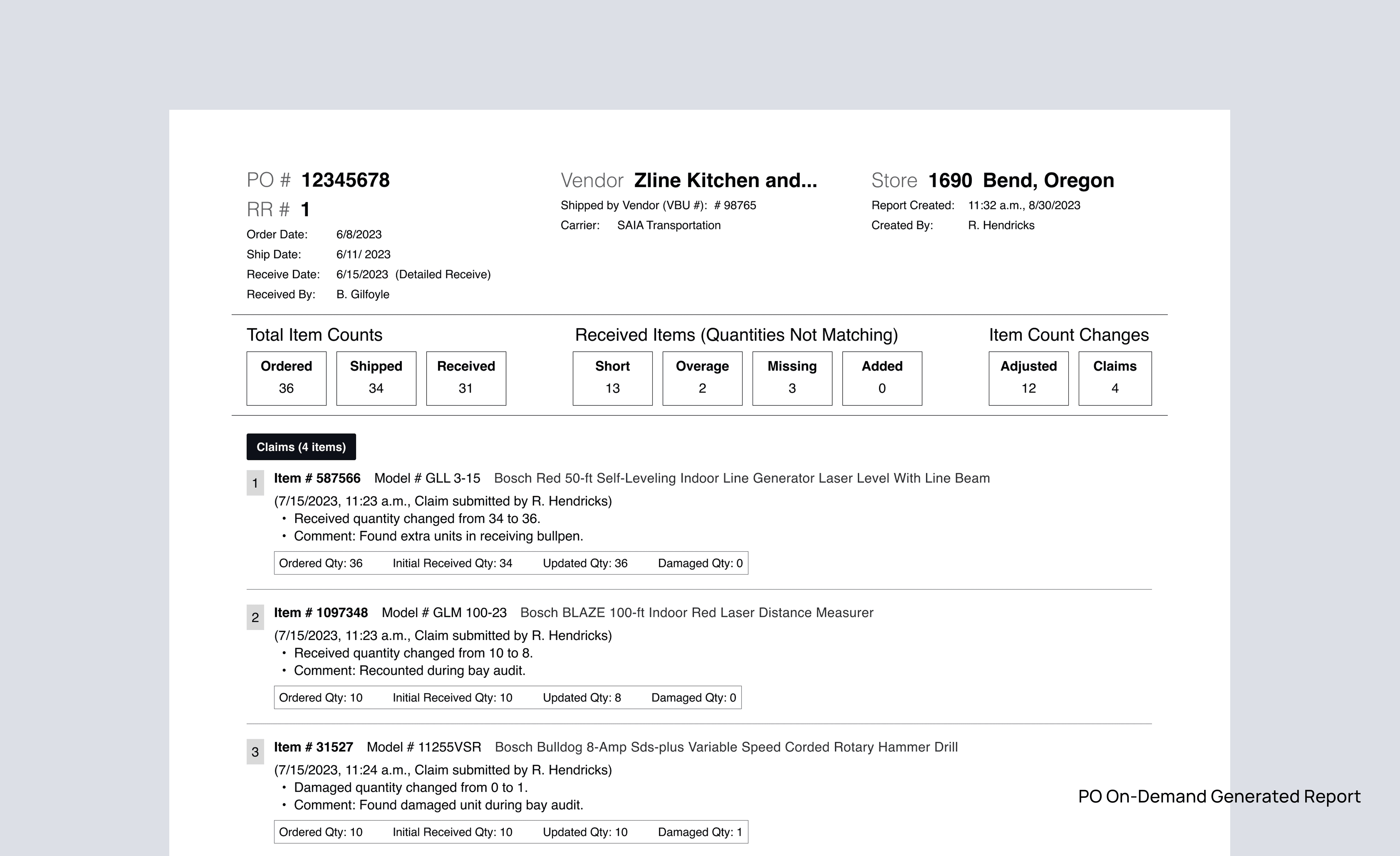
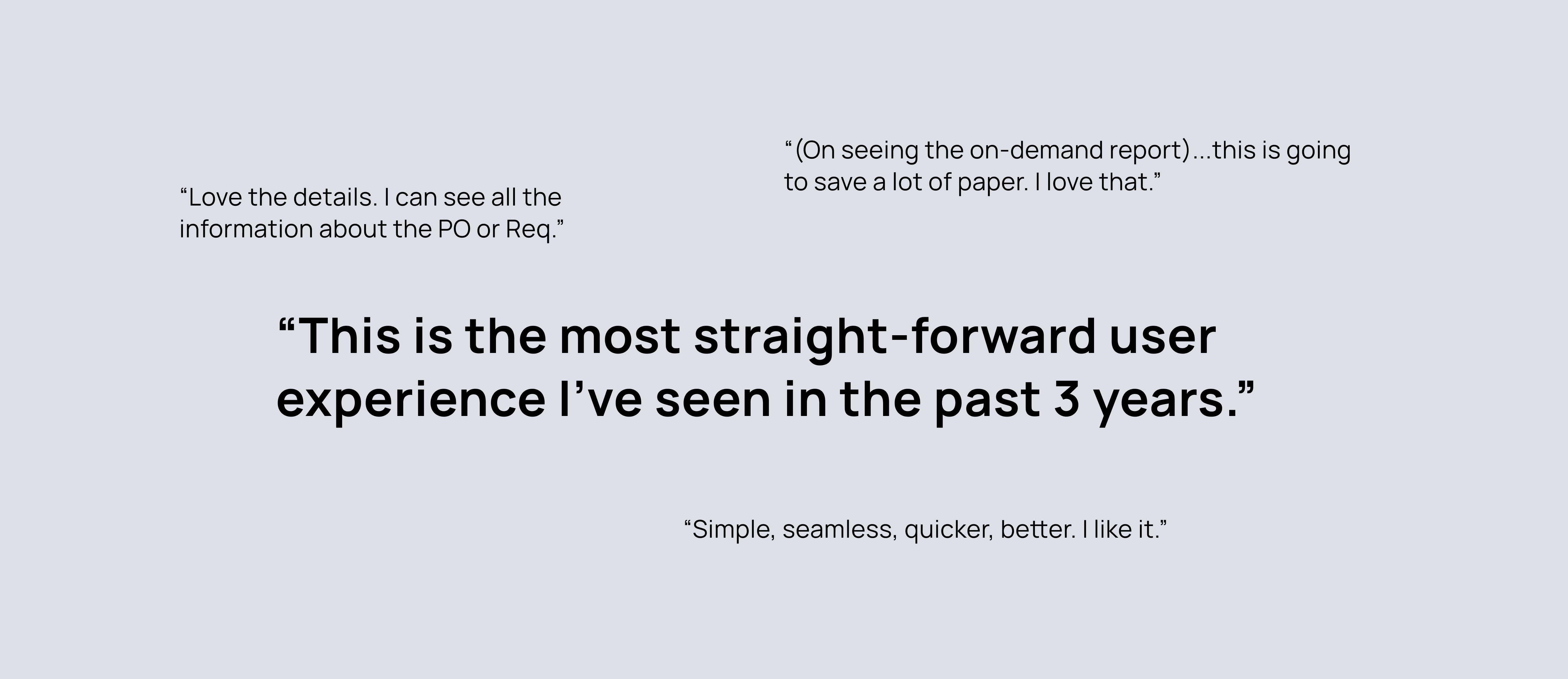
We validated early concepts directly in stores, running concept tests with 15 associates. The response was immediate and encouraging: less confusion and faster comprehension. But don't just take my word for it, read what the associates said themselves:
Final Designs
The final experience delivers a searchable, end-to-end workflow that surfaces the right information at the right moment.
Associates can submit claims, track progress, and communicate with DCs through a standardized system all without touching Genesis or digging through paperwork.